
Landscaping Resources and Tips
Planning, implementing and maintaining your outdoor space involves many elements: plant selection and care, insect control, deer management, lawn maintenance, and many other areas.
This section of our site offers help for you in these areas. Browse our seasonal tips for ideas related to each season, news for issues of the moment, our continuing series on deer resistant options. Ask our expert, Jim, questions about any of these areas.
Seasonal Landscaping Tips
Deer Resistant Options
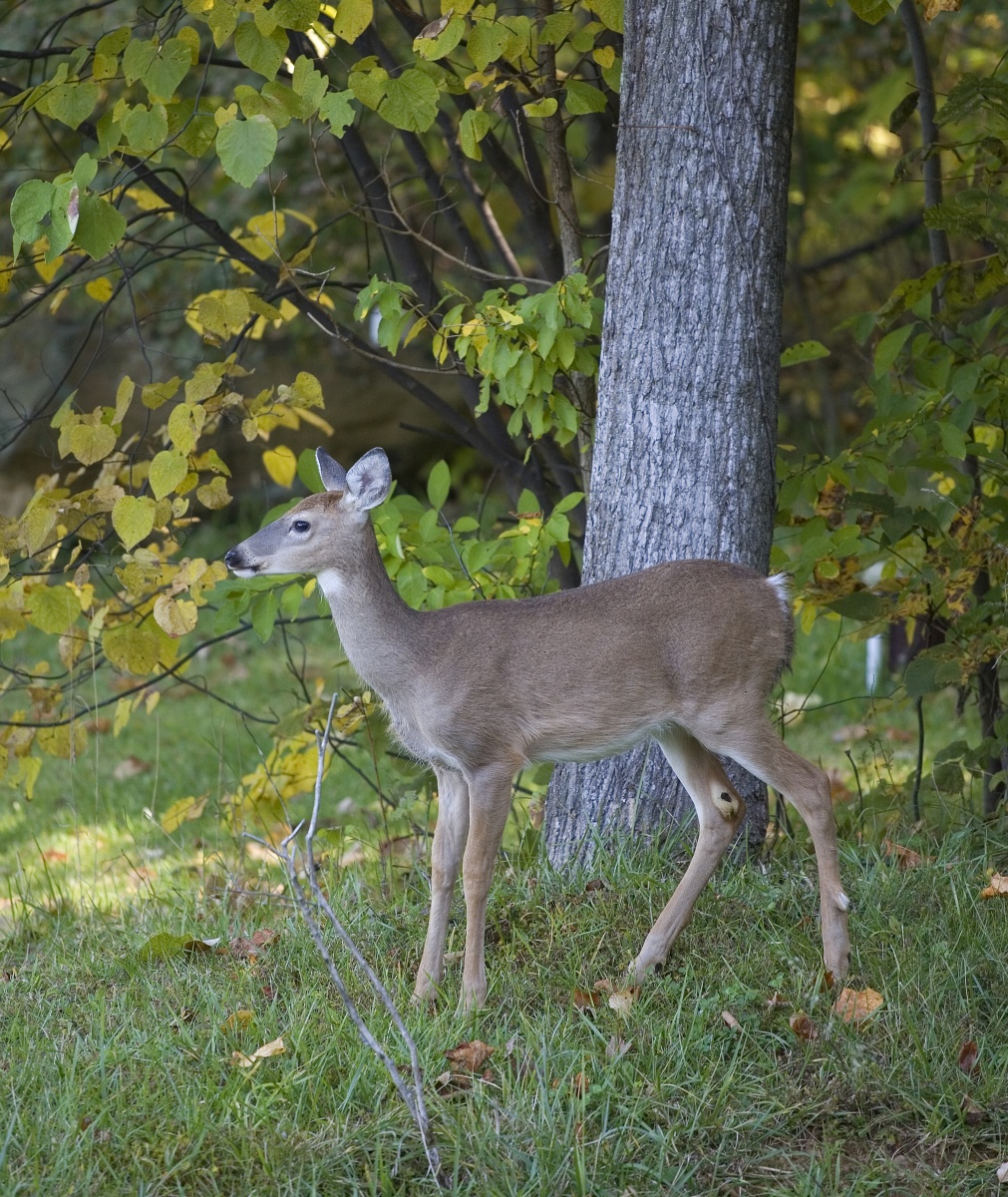 Are you seeking deer-proof landscaping? You should be, if you're interested in preventing not only deer damage, but also Lyme disease. If so, you need to be aware that your deer-proofing options extend beyond deer repellents, deer fencing, noise-makers and other gadgets designed to keep deer away.
Although deer on the verge of starvation will eat almost anything, the landscaper's best long-term option may well lie in a landscape plan that prescribes deer-proof, or "deer-resistant" plants. Simply planting what Bambi usually disdains to eat may not seem as strong a deer-proofing measure as surrounding your property with deer fencing, I admit. But then again, building a fortress around your property has severe aesthetic drawbacks.
If your attitude is, "I just let the deer come in and munch away; I enjoy viewing wildlife," please be aware that you may have to adjust your lifestyle accordingly. Deer can harbor the ticks that carry Lyme disease. The more deer that come to graze on your property, the greater the chances of you encountering the disease-bearing ticks. So take the proper precautions to prevent contracting Lyme disease.
For winter care, the best approach is to identify vulnerable shrubs and trees and put metal stakes and wire fencing as high as is reasonable. Deer can jump 6-8 feet, so the higher the fence you can use the better. Schichtels Nursery in Springville , New York has developed a solution, or you can search on http://www.cornell.edu for deer fencing systems.
